How to read a lingerie size guide accurately
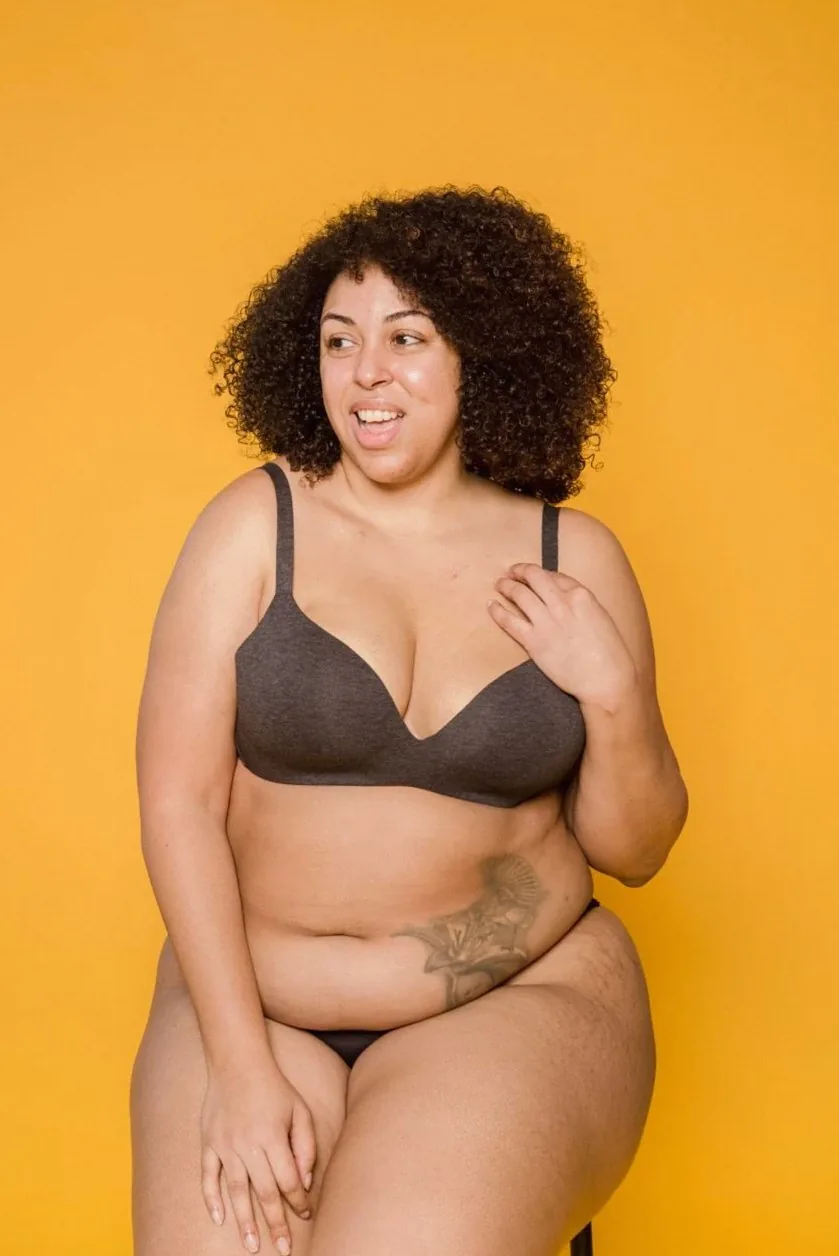
Most lingerie size guides are written from a manufacturer's specification sheet, not from measurements taken on the finished garment. The difference matters more than it sounds. A spec sheet records the intended dimensions at the point of cutting. By the time the fabric has been sewn, washed once, and handled in a warehouse, those dimensions can shift by a centimetre or more in either direction. For stretch fabrics like mesh and lace, the gap between spec and reality is often larger still.
Understand what the guide is measuring
A good size guide gives you two sets of numbers: your body measurements, and the garment's cut measurements. Body measurements tell you where you should fall on the size chart. Cut measurements tell you how large the actual garment is. If a guide only gives you one set of numbers, it is probably working from a spec sheet rather than a finished piece.
For bras and bralettes, the critical measurements are the underbust and the cup projection. For briefs and high-waist styles, it is the waist and the hip at the widest point. For bodysuits, you also need the torso length, which is the measurement from shoulder to crotch. Torso length is the one most frequently omitted from size guides, and it is the one that causes the most fit problems.
How stretch affects the numbers
Stretch fabrics are measured in their relaxed state, but they are worn in their stretched state. A mesh bodysuit with a 60 cm relaxed hip measurement will comfortably fit a 70 cm hip if the fabric has a 20% stretch. The size guide should tell you the stretch percentage or give you the maximum recommended body measurement, not just the relaxed garment measurement.
If the guide does not mention stretch at all, treat the listed measurements as the minimum body measurement the piece will fit, not the ideal. This is a conservative reading, but it will save you from ordering a piece that is too small.
What to do when you are between sizes
Being between sizes is the most common situation, and most size guides handle it badly by simply saying 'size up'. The more useful approach is to identify which measurement is closest to a size boundary and which has more room. If your bust is between sizes but your waist and hip are clearly in one size, order that size and accept that the bust may need a small adjustment.
For sets where the top and bottom size independently, this is less of a problem. For one-piece styles like bodysuits and chemises, it is worth contacting the boutique before ordering if you are genuinely on the boundary. A specific answer based on the actual garment is more useful than a general rule.
A note on Japanese sizing conventions
Japanese clothing sizes (the JIS standard) run differently from European or international sizing. A Japanese size 9 corresponds roughly to a European 38 or an international S/M, depending on the brand. Many lingerie pieces sold in Japan use European sizing on the label, which can cause confusion if you are used to Japanese size numbers.
At Mist42, all size guides are written in body measurements in centimetres, not in size numbers. This avoids the conversion problem entirely. If you know your measurements, you can use the guide directly without needing to convert between systems.
Size guides are only as useful as the data behind them. If you find a discrepancy between a guide and the piece you receive, it and passing it on to the boutique. That is how the guides get better.